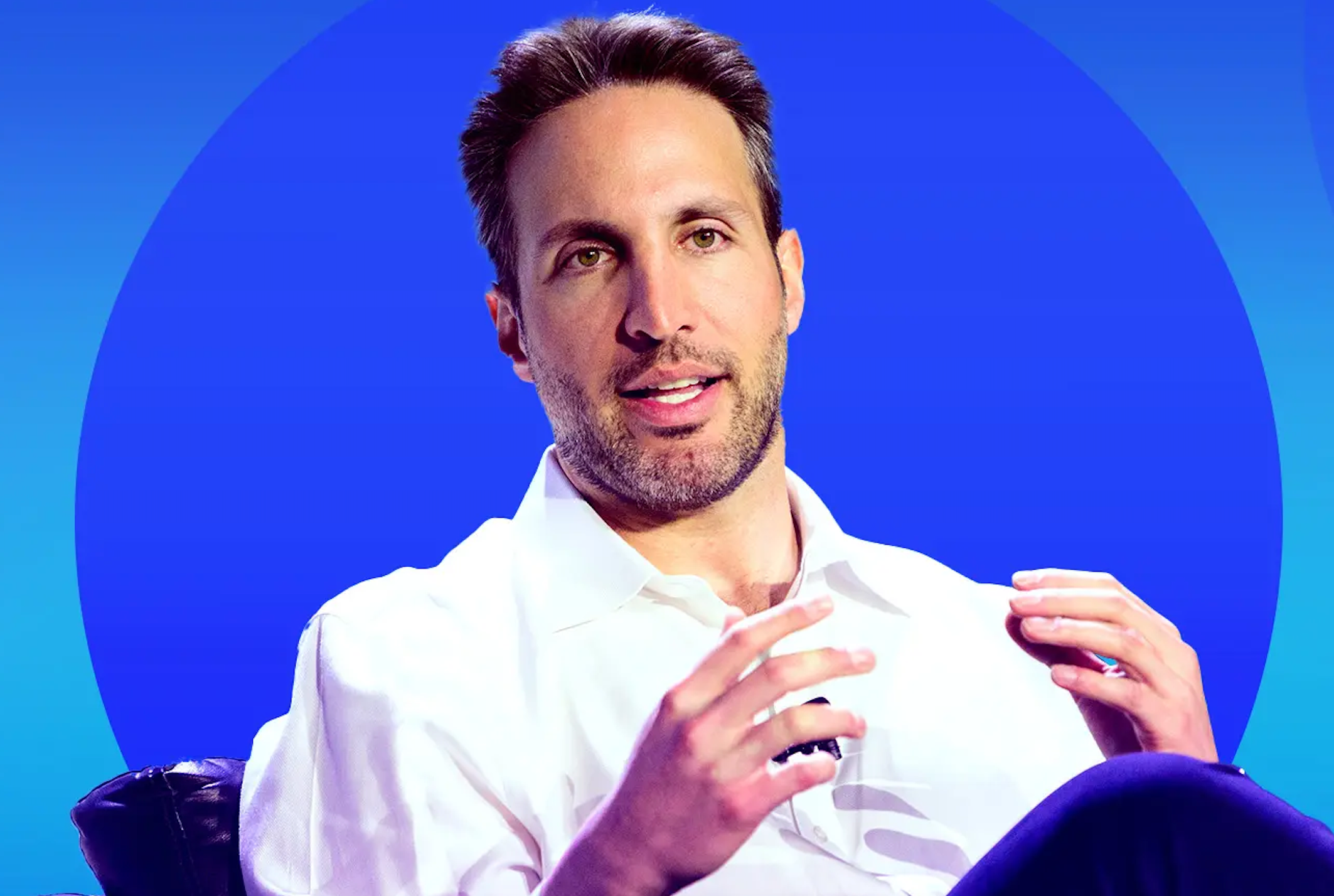
One of crypto's sharpest minds just walked. The industry's biggest fund just doubled down. The gap between those two moves is the most interesting story in venture right now. Before Kyle Samani posted his polished farewell to Multicoin Capital on February 4, he posted something else deleted within seconds, but not before the industry saw it.
"Crypto is just fundamentally not as interesting as many crypto enthusiasts wanted. Myself included. I once believed in the vision of Web3 and dApps. I don't anymore. Blockchains are essentially asset ledgers. They will reshape finance, but that's about it. Not much else."
Then came the official version: bittersweet moment, proud of the journey, still mega long SOL, crypto will "fundamentally rewire the circuitry of finance." He was leaving. The gap between those two posts is everything.
Samani didn't stumble into crypto. He chose it. He co-founded Multicoin in May 2017, discovered Solana when nobody was watching, led its earliest investment rounds, and built the firm into a $5.9 billion operation.
His co-founder Tushar Jain put it diplomatically in the LP letter: "Kyle's interests have expanded beyond crypto into other areas of technology."
Three months later, Chris Dixon closed a $2.2 billion fund that made a specific argument back. Fund 5 is 100% dedicated to crypto no AI, no robotics, no hedging. Asked whether it would follow rivals like Paradigm, which is raising $1.5 billion split across crypto, AI, and robotics, a16z's answer was a single sentence: "Fund 5 is 100% dedicated to investing in crypto entrepreneurs." Dixon's case isn't that crypto competes with AI.
It's that the AI economy cannot scale without crypto rails underneath it. When AI agents pay each other for data, GPU time, and API calls, they can't use wire transfers or wait days for bank settlement. They need programmable, instant, permissionless payment infrastructure which is exactly what blockchain provides. A16z has published the argument directly: AI agents are effectively unbanked, with no universal way to prove identity, permissions, or payment between autonomous systems. Coinbase's x402 protocol, which embeds stablecoin payments into HTTP requests, is already processing agent-driven transactions, with Stripe, Cloudflare, Vercel, and Google all integrated. The AI wave Samani is chasing, in Dixon's framing, needs the asset ledger Samani said he'd lost faith in.
The fund's focus is deliberately narrow stablecoin, DeFi lending, perpetual futures, tokenised assets and the logic behind the size is just as deliberate. Fund 4 raised $4.5 billion at peak euphoria in May 2022 and is still being deployed four years later. Fund 5 is smaller by design, built to move fast in a market where capital is scarce and valuations have reset. It still dwarfs every competitor: Dragonfly's latest fund closed at $650 million, Haun Ventures at $1 billion.
A16z's total committed crypto capital now sits at $9.8 billion across five funds, backed by a portfolio that includes Coinbase, Uniswap, Anchorage Digital, and Kalshi every major win built on financial infrastructure, not the consumer Web3 experiments the 2021 cycle promised.
The numbers give both sides something to stand on. Stablecoins have grown to $320 billion in market cap, climbing through every downturn, driven by real cross-border payments and commerce rather than speculation.
On the day a16z announced Fund 5, Bitcoin was at $81,000 and the Fear & Greed Index read 50 flat neutral. No euphoria. No panic. The long quiet middle.
Samani and Dixon don't actually disagree on the destination. Both believe crypto reshapes global finance Samani said so even as he walked out the door. The disagreement is about whether the AI era makes crypto more relevant or less urgent. Samani answered that for himself in February. Dixon answered it with $2.2 billion in May.
The deleted post was honest. The fund is the rebuttal. The market will settle which one was right.

From breaking news to thought-provoking opinion pieces, our newsletter keeps you informed & engaged.